
Smart building products

Smart building products

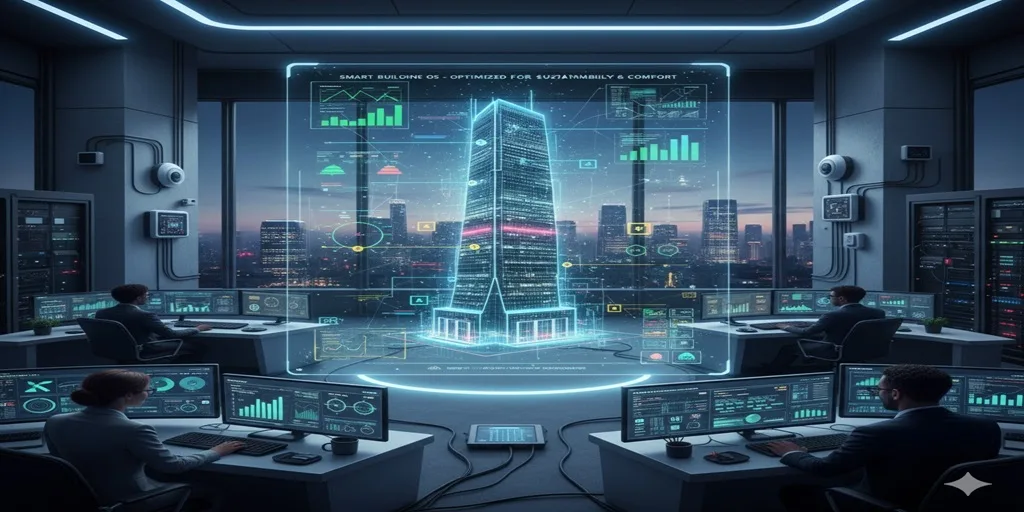
Smart building products are technologies and systems designed to automate and optimize a building’s essential functions, such as energy use, security, and occupant comfort. They typically use Internet of Things (IoT) devices, sensors, and software that are integrated into a central system.
1. Core Smart Systems & Platforms

Product/System Key Function 2024 Trends/Highlights
Building Management Systems (BMS) / Operating Systems Centralized platforms that control, monitor, and manage multiple building systems (HVAC, lighting, security, etc.). Cloud-Based BMS: Offers better scalability, data analytics capabilities, and remote control flexibility.
Artificial Intelligence (AI) and Machine Learning (ML) Analyzes vast amounts of building data, learns occupant behavior, predicts system needs, and automates decisions. AI-IoT Convergence: Used to optimize climate control and analyze occupancy patterns, making buildings more responsive and intelligent.
Internet of Things (IoT) Integration A network of sensors, controllers, and actuators that collect and exchange real-time building data (e.g., energy consumption, temperature, air quality). Serves as the “nervous system” of a smart building, enabling everything from smart lighting to predictive HVAC control.

2. Energy Efficiency & Sustainability

Product/System Key Function 2024 Trends/Highlights
Smart HVAC Systems Intelligently regulate heating, ventilation, and air conditioning based on occupancy, environmental conditions, and preset schedules. Energy Optimization: Increases energy efficiency, reduces carbon emissions, and supports Net-Zero Energy goals.
Smart Lighting Controls Automatically adjust lighting levels to adapt to daylight, occupancy, and schedules, sometimes offering personalized lighting. Focus is on both energy savings and enhanced user comfort.
Energy Metering and Monitoring Collects detailed energy consumption data for precise monitoring, analysis, and optimization. Supports the development of sustainability programs through data-driven insights.

3. Security and Safety

Product/System Key Function 2024 Trends/Highlights
AI-Driven Security Systems Real-time analysis of video surveillance, facial recognition, detection of unusual activity, and instant alerting. Proactive Security: Shifts from passive monitoring to active threat detection, often using AI to enhance existing camera infrastructure.
Smart Access Control Systems Manages personnel entry using biometrics (face/fingerprint), smart keypads, or NFC. Seamless Access Experience: High demand for touchless technology in the post-pandemic era.
Smart Fire & Life Safety Monitors smoke detectors, fire alarms, and detects issues like crowding or blocked emergency exits in real-time. Early Warning Systems: Uses advanced sensors and AI to provide rapid and accurate warnings for fires and safety threats.

4. Space Management and User Experience

Product/System Key Function 2024 Trends/Highlights
Occupancy Sensors & Space Management Software Monitors space utilization, often paired with desk booking software to optimize flexible and hybrid workplaces. Adapting to Hybrid Work: Maximizing space efficiency while conserving energy by powering down unused areas.
Indoor Air Quality (IAQ) Systems Sensors that monitor CO2, VOCs, and other contaminants, automatically adjusting ventilation. Health and Well-being: A primary focus, ensuring a healthy environment by actively managing air quality.
Digital/Smart Workplace Apps Tools for meeting room booking, visitor management, work order systems, and service robots (e.g., for greeting or delivery). Enhancing the Occupant Experience and operational efficiency.

5. Construction and Design Technology (Smart Construction)

Product/System Key Function 2024 Trends/Highlights
Building Information Modeling (BIM) Integrating and applying construction data throughout the entire life cycle (design, construction, and operation). Promoting digital design and improving coordination across design, construction, and maintenance phases.
Generative AI Design Tools Rapidly creates design proposals, optimizes space layout, and performs feasibility analysis based on text prompts. Efficiency Gains: Accelerating the design process and allowing designers to focus on creative concepts.
Construction Robots and Smart Equipment Automated devices used for construction, inspection, and maintenance tasks. Addresses labor shortages and boosts construction efficiency, often integrated into smart construction management systems.