
HDR vs SDR for Security Cameras: Critical Standards for High-Efficiency Assets
(2026 Guide)
In the realm of professional surveillance and Smart Building IoT, the choice between HDR (High Dynamic Range) and SDR (Standard Dynamic Range) is far more than a visual preference; it is a mechanical necessity that dictates the quality of your operational data. To ensure precise technology integration, understanding how these formats impact your high-efficiency assets and long-term measurable ROI is crucial for every facility manager and security integrator.
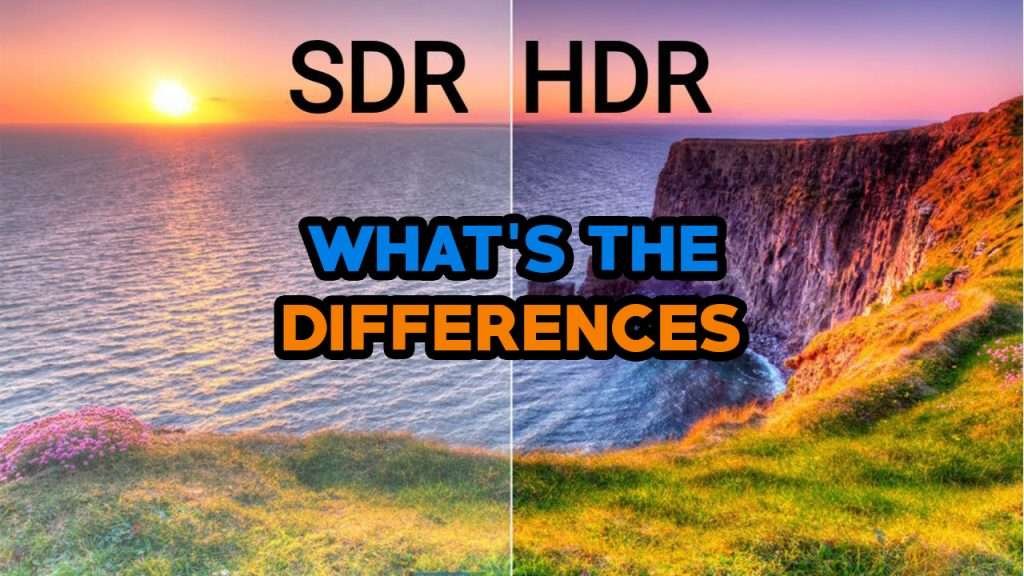 HDR vs SDR security camera
HDR vs SDR for Security Cameras: The Industrial Difference
While both terms describe the dynamic range—the ratio between the brightest and darkest parts of an image—they function with vastly different efficiencies in the complex lighting environments typical of industrial parks and smart complexes.
1. Dynamic Range & Contrast Management
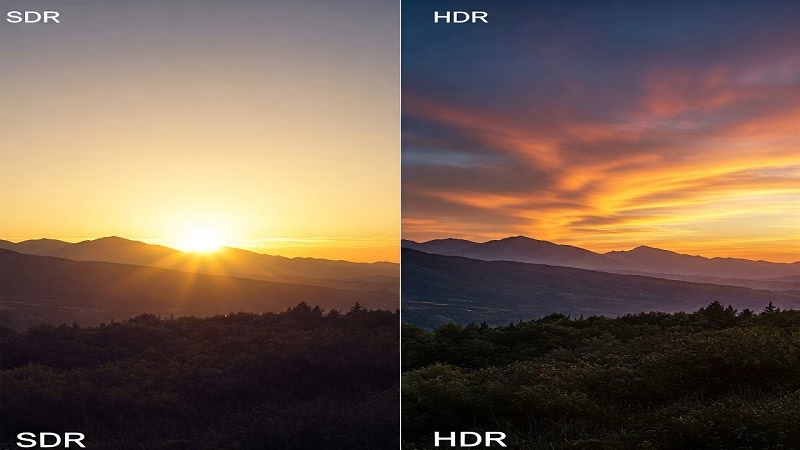
HDR (High Dynamic Range): Simultaneously displays deep blacks and radiant whites by using multiple exposure captures or advanced sensor processing. This increased contrast ratio is essential for prior prevention, allowing security teams to identify license plates in bright sunlight while simultaneously monitoring details in dark garage corners.
SDR (Standard Dynamic Range): Features a much narrower brightness scale. In high-contrast scenes, SDR often suffers from “crushed shadows” or “blown-out highlights.” In a professional security context, this leads to a direct loss of critical evidence, effectively decreasing the measurable ROI of your entire surveillance infrastructure.
2. Color Depth & Recognition Accuracy
HDR (10-bit or 12-bit): Supports over a billion colors. This level of precision is vital for AI-driven face recognition and automated vehicle control. With higher bit depth, gradients are smoother, which prevents the “banding” effect that often confuses AI motion detection algorithms.
SDR (8-bit): Limited to approximately 16.7 million colors. While sufficient for basic monitoring, the lack of color nuance can lead to a higher rate of false alarms in automated systems, rendering them less effective as high-efficiency assets.

Industrial Procurement Standard: Is Your Camera Truly High-Efficiency?
True HDR (120dB+): Ensure the sensor hardware supports real-time HDR, not just digital wide dynamic range (DWDR).
AI Synergy: Verify the camera metadata is compatible with CE Certified AI Edge Video Boxes for precise technology integration.
Bit Depth: Demand 10-bit or 12-bit color depth to ensure precise technology integration without data artifacts.
ROI Proof: Can the device reduce false alarms by at least 30% in high-contrast lobby areas?
The Synergy of HDR and AI Analytics
In 2026, the real value of HDR lies in its ability to provide “clean data” for AI Edge Video Servers. Precise technology integration means that the hardware (cameras) must provide enough dynamic detail for the software (AI) to process.
Enhanced Metadata Extraction: HDR metadata allows AI models to distinguish between a person’s silhouette and a shadow in a dark hallway, a task where SDR often fails.
Reduction in Storage Friction: While it may seem counterintuitive, higher quality HDR footage often results in better compression efficiency when using H.265+ codecs, as the noise in dark areas is significantly reduced, leading to more stable bitrates.
Strategic Deployment for Measurable ROI
To maximize your technology investment, HDR should be the non-negotiable standard in the following B2B scenarios:
Smart Building Lobbies: Entrances with floor-to-ceiling glass require HDR to capture facial details of incoming personnel against the strong outdoor backlighting.
Logistics & Warehousing: Managing vast territories with fluctuating lighting requires the comprehensive supervision that only HDR sensors can provide.
Smart Campus Perimeter Security: For expansive areas like campuses or energy sites, HDR captures intricate details during the “golden hours” of sunrise or sunset, ensuring zero downtime in security integrity.
The Role of SDR in Legacy Building Automation
While HDR is the gold standard, SDR remains a practical choice for specific Building Automation contexts where high contrast is not a factor:
Controlled Indoor Environments: In offices with uniform LED lighting, SDR provides a consistent and reliable viewing experience.
Legacy Infrastructure: Many existing Smart Offices utilize monitors and transmission cables that do not support HDR metadata. In these cases, SDR ensures system-wide compatibility without immediate hardware overhauls.
Final Verdict: Investing in High-Efficiency Assets
The decision to implement HDR or SDR should be viewed through the lens of long-term asset performance. Choosing CE certified HDR hardware ensures that your facility is future-proofed against the increasing demands of AI and automated governance.
By integrating HDR as a core component of your Smart Building IoT strategy, you are not just buying a camera; you are securing a measurable ROI by ensuring that every frame captured is a high-value data point.
Ready to upgrade your infrastructure? Visit our Solutions Page to see how ChenAnIoT integrates these technologies into unified management frameworks.